 Skip to content

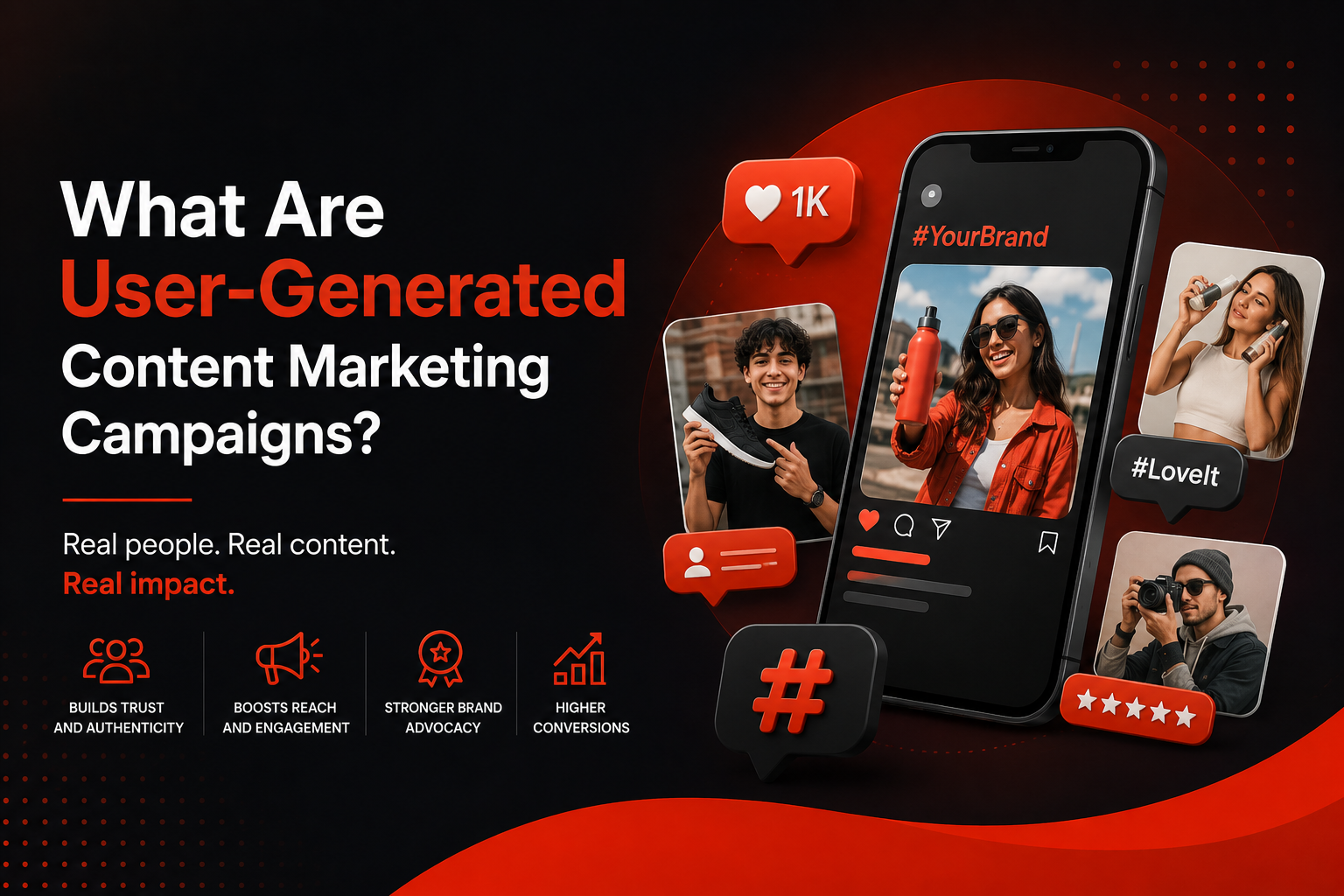
User-created content marketing campaigns are brand-led programmes that motivate real customers to produce content (pictures, videos, reviews or testimonials) and distribute it, in support of a product or service. Brands then curate and disseminate that content across owned channels to establish trust, extend reach, and cut content development expenses.
Brands invest a lot of money to produce slick content that consumers are increasingly sceptical of. Nielsen’s Trust in Advertising research found that 92% of consumers trust recommendations from people they know more than advertising from companies.
UGC marketing tackle this head on: they shift content creation to the people audiences already trust – previous consumers.
In this essay, I’ll break down what UGC content marketing campaigns are, how they work and what makes them powerful. It also considers the practical factors that companies and agencies need to address before launching one.
What is User Content Marketing?
User produced material (sometimes shortened to UGC) is any type of content that comes from a customer or end user, not the brand. This might include Instagram photographs, TikTok videos, Twitter tweets, product reviews, blog articles, and even forum comments.
User-generated content marketing campaigns are systematic efforts to collect and promote that material. A brand does not leave content production to chance; it creates conditions for easy, motivated and shareable material from customers. The brand then repurposes that content for commercials, social media posts, email campaigns or product pages.
A social media marketing agency that works with a consumer brand, for example, may launch a hashtag campaign, establish a product giving programme, or partner with micro-influencers to create a consistent supply of authentic customer material.
Why UGC Campaigns Are More Effective Than Traditional Advertising
Social media’s value as a distribution channel is widely understood, but what UGC brings to the table that paid creativity cannot is social proof.
- In numerous critical cases, UGC content conversion rate is far superior to brand-produced content:
- Purchase decisions: Shoppers who interact with UGC on a product page are 161% more likely to convert (Bazaarvoice statistics).
- Ad performance: Meta says User-generated content marketing campaigns advertisements perform better than normal creative with 4x greater click-through rates.
- Cost efficiency: Brands can establish UGC libraries to lower the need to spend money on studio shootings and use customer-generated content marketing materials to lower creative production expenses.

The Mechanics of a User-generated content marketing campaigns:
There’s a repeatable framework with UGC marketing. Understanding each step helps companies and agencies construct programmes that can provide content continuously, and not only in a one-off campaign spike.
Content Brief Definition – Stage 1
The brand dictates the type of material that is needed and why. You need different material for a product launch than you need for a seasonal promotion. Lifestyle photography is not the same as unboxing videos. Brands that miss this phase wind up with content that is tough to use across channels.
Stage 2: Find the Right Audience
- Not every customer will produce material. Brands activate involvement by:
- Hashtags that are branded A catchy and easy hashtag reduces the barrier to engagement on social channels.
- Contests and incentives: Discounts or prise draws to drive entries. Brand channel features.
- Influencer seeding: Ship products to micro-influencers with 10,000-100,000 followers and build introductory content that reflects the brief for regular customers.
Usually, an influencer marketing agency will take care of the seeding phase, while a social media agency will take care of hashtag monitoring, rights clearance and redistribution.
Stage 3: Content Curation and Rights Acquisition
Brands don’t automatically own material from consumers. UGC cannot be used in paid positions or on-site without explicit consent. Many networks, such Later and TINT, automate rights requests directly through comments or direct messages.
Leaving out this step exposes you to risk. This risk is well controlled with clear terms and conditions in the campaign brief and rights requests by the platform.
Stage 4: Deploy to Channels
Once approved, UGC becomes part of the content marketing ecosystem. Common distribution points are
- Social media ads: UGC-style creatives are performing particularly well in Meta and TikTok ad placements.
- Email marketing: Product emails with customer images boost click-through rates.
- Product pages: UGC galleries on-site lower return rates through appropriate product expectations.
- Organic social: material calendars are populated with consumer material, at no additional production cost.
This is where brands that partner with a social media marketing firm will often pass the buck on distribution management, taking advantage of the agency’s scheduling, analytics, and sponsored amplification abilities.
Stage 5: Measuring and Optimising
UGC campaigns have tangible deliverables: number of submissions, engagement rate, reach, conversion rate and cost per asset. By measuring these KPIs, brands can see what content works, which activation strategies drive the most participation and where the programme needs to be adjusted.
Who should run UGC campaigns and who does?
UGC initiatives aren’t just the domain of big consumer companies. Successful UGC programmes are run by e-commerce operators and service brands as well as small and mid-sized organisations. The investment required is less than traditional creative development, which makes UGC an accessible choice for brands with limited resources.
Businesses without the internal social media capabilities have to rely on a social media marketing firm or a more general digital marketing agency to manage campaign design, influencer outreach, content rights and paid amplification. Brands looking into their alternatives often seek a marketing agency near me to discover local partners with regional market understanding. For example, the finest digital marketing organisations in Lahore have market specific experience to bring to campaigns targeting South Asian audiences, where platform usage patterns and influencer economics are different from western markets. Read report here.
It’s particularly important for brands executing social media marketing packages in Pakistan to opt for companies that know the local platforms (Facebook still has a lot of audience share in the region) and can source relevant content creators from those regions.
Common Mistakes Brands Make in UGC Campaigns
UGC campaigns don’t work for particular, avoidable reasons. The three most common patterns are as follows:
No clear brief: When brands establish a hashtag without stating what content they want, they get unusable entries. A brief that specifies the content type, platform and style eliminates uncertainty.
Not enough activation: A hashtag alone seldom creates volume. Brands that do not seed through an influencer marketing firm or incentivize submissions and rely solely on organic involvement generally have poor submission rates.
No rights cleared: Using customer content without permission, even with proper attribution, can lead to copyright claims against brands. Paid use is non-negotiable without rights clearance.
All these faults can be easily avoided with adequate marketing preparation. Rights management and activation strategy are included in the usual workflow of SMM agencies, which decreases the execution risk for companies new to UGC programmes.
User Content Creation: The Value of It in a Social Marketing Strategy
UGC campaigns serve a distinct and crucial purpose in social marketing: they provide material that a brand itself cannot create, in a manner that viewers find credible. They minimise their production costs, boost the performance of their ads and grow a community around a product or brand over time.
The strategic rationale for UGC is not one of newness. It is based on proven performance benefits and a simple operational architecture that can grow with the right agency or in-house team assistance.
Brands who handle UGC as a one-off effort miss out on the cumulative benefit. The best programmes have continuing content pipelines, a constant stream of consumer content that feeds paid, organic, and on-site channels all year.
UGC Marketing Campaigns: Frequently Asked Questions
What’s the difference between influencer marketing and UGC?
UGC is material provided by regular customers without any formal brand agreement. Influencer marketing is when a brand pays or gifts a content creator to create content on their behalf. The two typically overlap: influencer seeding provides initial UGC that models the brief for organic consumer submissions.
Do brands have to pay for content created by consumers?
Not necessarily. Lots of customers create content themselves for recognition, discounts or a chance to win a contest. But marketers wanting high-quality UGC at scale typically partner with micro-influencers in a compensated agreement, particularly during campaign launch phases.
How can brands gain the legal right to use customer content?
Brands need clear consent before exploiting customer content in sponsored placements. This usually happens via rights request tools on the platform or clear terms and conditions in the campaign brief. Reposting with credit does not give you permission to use the material for commercial purposes.
What platforms are best for UGC campaigns?
Instagram and TikTok have the most UGC volume among visual products. Facebook remains strong in regions such as Pakistan and South-east Asia. Text UGC is more suitable for review services like Google and Trustpilot for service categories.
What’s the cost of running a UGC campaign?
costs vary with magnitude and mode of activation. A campaign executed by a social media marketing agency with influencer seeding will generally be more expensive up front than an organic hashtag campaign but will produce higher quality, more useable content. Social media marketing packages often include UGC campaign management together with content and paid media services.
Can tiny businesses undertake UGC campaigns?
Yup. Bigger brands are less concerned about customer trust, thus they usually profit more from UGC. A focused hashtag campaign, a local micro-influencer product gifting programme and a clearly defined rights clearance process are all it takes to develop an effective UGC programme on a minimal budget
